Arranging the funeral blessing
In short
A funeral blessing is a church service of about half an hour, led by a pastor in a church, chapel or graveside. Church members have this right; non-members can be blessed at the family's request. The pastor costs nothing. Helsinki blessings run Tuesday to Saturday, usually within 2-3 weeks of the death. Non-members pay a chapel fee: 400 euros weekdays, 630 Saturdays.
Who can be blessed
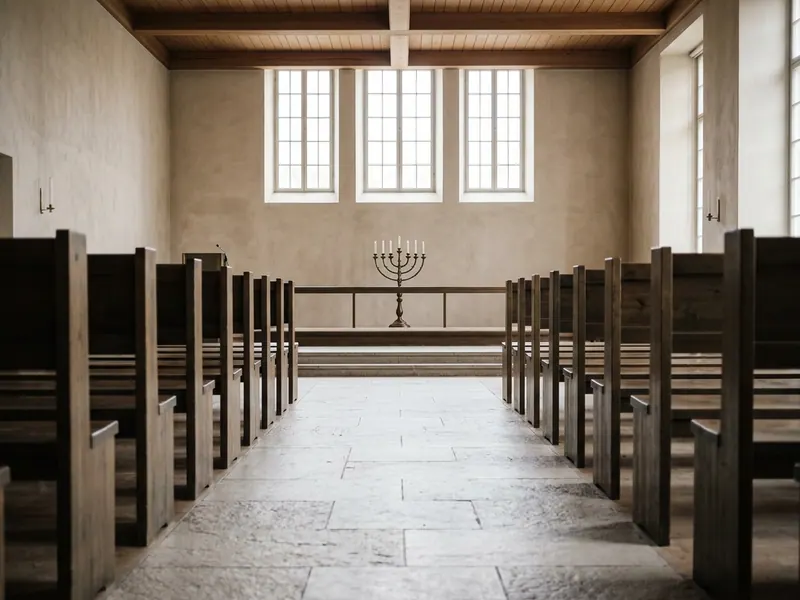
Every member of the Evangelical Lutheran Church has the right to be blessed at burial. The right belongs to the deceased and remains even if the relatives are not church members. A person who was not a member can also be blessed if the relatives or those arranging the funeral request it. In both cases the deceased's own wish must be respected: if they asked for a blessing or declined one during their lifetime, that wish is followed. The Funeral Act requires that the deceased's conviction and wishes are respected in burial and cremation. If you are not sure whether the deceased was a church member, we check with the parish on your behalf. If no blessing is wanted, the ceremony can be held in civil form; see the guide on burial for non-members and civil funerals.
Booking the time and place
The time, place, pastor and cantor are booked through the parish. In Helsinki, bookings are made with the burial services of the Helsinki parish union by phone or in person; a Helsinki resident can also book the blessing time online at asiointi.helsinginseurakunnat.fi. In Espoo, the parishes' booking service reserves the time, place, pastor, cantor and bells. Most families authorise us to make the bookings; then it is enough to agree with us on the day and place you prefer. The blessing can take place in a church, a funeral chapel, a hospital chapel, at the grave or at another place agreed with the parish. In Helsinki, blessings are held Tuesday to Saturday and usually take place within 2 to 3 weeks of the death. In Espoo, blessings are held on weekdays and Saturdays, but not on Mondays at the Espoo funeral chapel and the Kellonummi chapel. Arrangements can begin before the burial permit is issued, but the blessing and burial themselves require the doctor's burial permit.
What the blessing costs
The pastor's blessing is free of charge for everyone, including non-members. Church members pay nothing for the chapel or the parish hall. The chapel fee applies only to the deceased who were not members of the Evangelical Lutheran Church. The parish union's invoices arrive after the blessing, and funeral costs are deductible in the estate inventory. We pass the parish fees on unchanged and add nothing to them. Church membership does not affect the price of the grave; the deceased's home municipality does.
- Chapels at Helsinki cemeteries: 400 euros on weekdays and 630 euros on Saturdays, non-members only
- Espoo funeral chapel 458 euros and Kellonummi chapel 560 euros, non-members only
- Pastor: free of charge for everyone
- Viewing of the deceased in a chapel before the blessing in Helsinki: 80 euros
- Cold storage of the coffin at the Helsinki parish union: 50 euros per started week for the first three weeks, then 15 euros per started day
Meeting the pastor and choosing the music
The officiating pastor meets the family before the funeral. In Espoo, the pastor makes contact at least a week before the service. In that conversation you can describe what kind of person the deceased was and what you would like said about them in the funeral address. You also agree on practical matters: when the flowers are laid, who carries the coffin and your own wishes. The music is agreed with the parish cantor. Hymns are usually sung at the blessing, and other music can be performed as well, for example pieces the deceased wished for. If you would like your own singer or musician, tell the cantor and us in good time. You can ask the pastor and cantor to take part in the memorial gathering too; the pastor can lead it and the cantor can provide the music. We help draw up the programme and, if needed, a printed order of service.
Viewing the deceased and arriving at the service
If the family wishes to see the deceased before the blessing, a viewing can be arranged in the chapel. In Helsinki the viewing costs 80 euros and is booked through the burial services; we make the booking and attend with you if you wish. The viewing matters especially to those who did not have time to say goodbye or who arrive from another town. Mourners arrive in good time before the service so that everyone is seated before the music begins. The coffin is usually already placed in front of the altar, head towards the altar. The closest family sit in the front rows; other relatives, friends and colleagues sit behind them. If you would like a particular seating order, we tell the verger in advance. Phones are silenced before the service. Dress and other customs are covered in the guide on funeral etiquette.
The order of the service
The blessing lasts about half an hour. The pastor leads the service and guides everyone through it, so the family does not need to remember anything by heart. The order follows the church's service book, and your own wishes for music and the laying of flowers can be fitted in. The usual order is as follows.
- Opening hymn or other music
- Opening blessing and introductory words
- Bible reading and prayer
- The pastor's address, remembering the deceased based on what the family has told
- The blessing: everyone stands, the pastor places sand on the coffin lid and speaks the words of blessing
- One or more hymns
- Laying of flowers beside the coffin at the start or the end, as agreed
- Closing music, during which the coffin is carried out if the burial follows immediately
Flowers at the blessing
The closest family's coffin spray usually lies on the coffin. Other mourners bring a small bouquet, a bouquet, a wreath or a single flower, which is laid beside the coffin. Flowers can be laid either at the start of the service or at the end, or only at the grave; the practice varies between parishes and is agreed with the pastor. A short greeting or a word of thanks is often said when the flowers are laid. The closest family lay their flowers first. Flowers are ordered 2 to 4 days before the service and delivered straight to the chapel or church. Our coffin spray costs 185 euros; other arrangements we order from two long-established partner florists. If the deceased is to be cremated, agree with the parish on what happens to the flowers after the blessing: the mourners can take them to the grave site, or the verger delivers them there. Single flowers can also be brought to the memorial gathering. Flower types, ribbon texts and prices are covered in the guide on funeral flowers and decorations.
Bearers and the procession to the grave
If the deceased is buried in the coffin straight after the blessing, the coffin is carried out of the chapel or church during the closing music. Usually six bearers are needed, at least four. The bearers are usually close relatives or friends. Their positions around the coffin are agreed in advance, and the verger or we brief them before the service. The deceased is carried feet first to the hearse waiting outside the chapel. The pastor and the verger lead the procession; behind the coffin come first the closest family and then the other mourners. At the grave the verger guides the lowering of the coffin and sees that the grave is covered with a lid. The flower arrangements are brought to the grave, and a hymn may be sung at the end. Then one of the family invites those present to the memorial gathering. If there are not enough bearers in your own circle, tell us in advance and we agree on an arrangement.
When the deceased is cremated
In Helsinki more than 80 per cent of the deceased are cremated. When the deceased is cremated, the blessing is usually held at the coffin in the same way as for a burial. After the blessing the coffin stays in place or is carried to the car, and we transport it to the crematorium. In our practice the cremation usually takes place within 1 to 2 weeks, and the urn is ready a few days later. Before the cremation the parish union's burial services need a copy of the burial permit signed by the doctor; we deliver it. The time of the urn lowering is agreed separately with the burial services. The closest family usually take part in the lowering guided by the verger, and the pastor can attend if you wish. The blessing can also be held only at the urn if the family prefers; then there is no service at the coffin, and the blessing and the urn lowering take place at the same moment. The options and prices for placing the ashes are covered in the guide on urn lowering and placing the ashes in Helsinki.
What you can leave to us
In arranging the blessing we take care of everything that does not require your personal decision. We book the time, place, pastor and cantor, forward the burial permit to the parish, order the flowers and deliver them to the chapel, transport the deceased, arrange the viewing and brief the bearers. You decide the day and place, the music, the flowers and what kind of service it will be. Every choice, price and date is visible in the family's shared online space, where every relative sees the same information. Arrangements can be made at the office, by phone or entirely online. Call 09 6129 890 or book a planning visit at Annankatu 12; the visit is free of charge. We also come to your home if needed, and we serve you in Finnish, Swedish and English.
Frequently asked questions
Can a non-member be blessed at burial?
Yes, if the relatives or those arranging the funeral request it. The deceased's own wish decides: if they declined a blessing during their lifetime, none is held. The pastor is free of charge, but for a non-member a chapel fee is charged in Helsinki, 400 euros on weekdays and 630 euros on Saturdays.
What does the blessing cost for a church member?
For a church member the chapel, the parish hall and the pastor are free of charge. Costs arise from flowers, the coffin, transport and any memorial gathering. If the deceased is kept in the parish union's cold storage, Helsinki charges 50 euros per started week for the first three weeks and then 15 euros per started day.
How soon can the blessing be held?
In Helsinki the blessing is usually held within 2 to 3 weeks of the death, Tuesday to Saturday. The timing depends on free slots at the chapels and with the pastor, and on when the burial permit is issued. A forensic investigation delays the permit. Arrangements can begin before the permit arrives, and we book the time as soon as your wishes are clear.
How many bearers are needed?
Usually six, at least four. Bearers are needed if the coffin is carried to the grave or the car after the blessing. They are usually close relatives or friends, and their positions are agreed in advance. The deceased is carried feet first. If there are no bearers in your own circle, agree on it with us beforehand.
Can the blessing be held on a Sunday?
At the Helsinki cemetery chapels, blessings are held Tuesday to Saturday. In Espoo, blessings are held on weekdays and Saturdays, but not on Mondays at the Espoo funeral chapel and the Kellonummi chapel. The Saturday chapel fee for a non-member in Helsinki is 630 euros and the weekday fee 400 euros; church members pay nothing.
How long does the blessing last?
About half an hour. The service includes hymns or other music, the opening blessing, a Bible reading and prayer, the pastor's address, the blessing with sand and the laying of flowers. If the coffin is escorted to the grave, the procession and the moment at the grave extend the whole. The memorial gathering is usually held straight after the blessing.
What happens to the flowers if the deceased is cremated?
Agree on this with the parish in advance; we help settle the practice when we book the blessing time. The mourners can take the flowers to the grave site straight after the blessing, or the verger delivers them there. Single flowers can be brought to the memorial gathering, for example for the memorial table.