Transporting the deceased: who may do it and what it costs
In short
Only a funeral home with proper vehicles and staff, a health-care unit or the police may transport the deceased. Relatives may not drive the deceased but may be present. One transport in the Helsinki region costs 290 euros with us; further transfers, night collections and long distances are quoted in advance. Dressing and coffin placement cost 180 euros.
Who may transport the deceased
Moving a deceased person is not ordinary transport. In Finland the deceased may be transported only by a funeral home with suitable vehicles and trained staff, by a health-care unit such as a hospital moving the deceased to its own cold room, or by the police when the death is being investigated. Relatives may not drive the deceased in their own car, not even a short distance. This does not prevent you from being present: you may be there when the deceased is collected from home or a care home, and you may accompany the coffin from the chapel to the cemetery. The practical work is always our responsibility. If you are unsure who handles the transfer in your situation, call us and we will tell you right away.
- The funeral home: every transfer from the place of death to the cold room, chapel, cemetery or crematorium.
- The health-care unit: the hospital or care institution moves the deceased to its own cold room.
- The police: after a sudden or unclear death, the transfer for investigation.
When the police handle the transport
Death is always confirmed by a doctor. If a death at home is expected, call the treating doctor or 116 117, and the transfer is arranged in the usual way. If the death is sudden or the cause is unclear, call the emergency number 112. The police then arrange the transport of the deceased to a hospital for investigation, and the cause of death may be established in a forensic autopsy. At this stage the family chooses neither the carrier nor the destination; we take over only once the police have released the deceased. A forensic investigation delays the burial permit, so the date of the blessing and cremation is confirmed later than usual. You can still contact us right away: we start planning, reserve provisional times and continue the transfers to the chapel, cemetery or crematorium as soon as it is possible.
The first transfer from the place of death to the cold room
In a hospital or care home the staff tell the family about the death and look after the deceased until the funeral home collects them. There is no deadline for the first contact; most families call within a few days. After a death at home or in a care home, the first transfer to the hospital cold room may be made in a transfer bag, not yet in a coffin. Every later transfer, to the chapel, cemetery or crematorium, is made in the coffin. In the first call it is enough to tell us who has died and where the deceased is now. We agree the collection directly with the ward or care home, take care of the documents and let you know when the transfer has been made. If you wish, you can be present during the collection.
The transfers in order
One funeral usually involves several transfers. They are always made in the same order, and each one is agreed with you in advance. The list below shows the most common sequence for cremation and for burial. If the blessing is held in a church, the coffin is brought there on the day and taken from there straight to the cemetery or crematorium. If the cremation takes place without a blessing, the third step is left out and the coffin is moved from the cold room straight to the crematorium. We transport the urn to the agreed place or hand it over to you.
- 1. From the place of death to the hospital cold room: from home or a care home in a transfer bag, in a hospital as the ward's own transfer.
- 2. From the cold room to the chapel or church: in the coffin, after placing in the coffin, on the day of the blessing or into interim storage.
- 3. From the chapel to the cemetery or crematorium: after the blessing, in the coffin.
- 4. The urn from the crematorium to the cemetery or the family: a few days after the cremation.
Placing in the coffin and dressing
A coffin is always needed, also for cremation. Before the transfer to the chapel or crematorium the deceased is dressed and placed in the coffin. Our staff do this calmly and without hurry; the service costs 180 euros and is included in every one of our funeral packages. You can bring the clothes to the office or hand them over at the collection: many choose the deceased's own clothes, others the garment that comes with the coffin. Small keepsakes such as a letter, a photograph or a flower are agreed with us in advance, because cremation and burial have different restrictions. The deceased lies on the back in the coffin, and the coffin is always carried and transported feet first. If you wish to be present at the placing in the coffin or to say goodbye quietly afterwards, we arrange the time and the room for it.
Vehicles, documents and identity checks
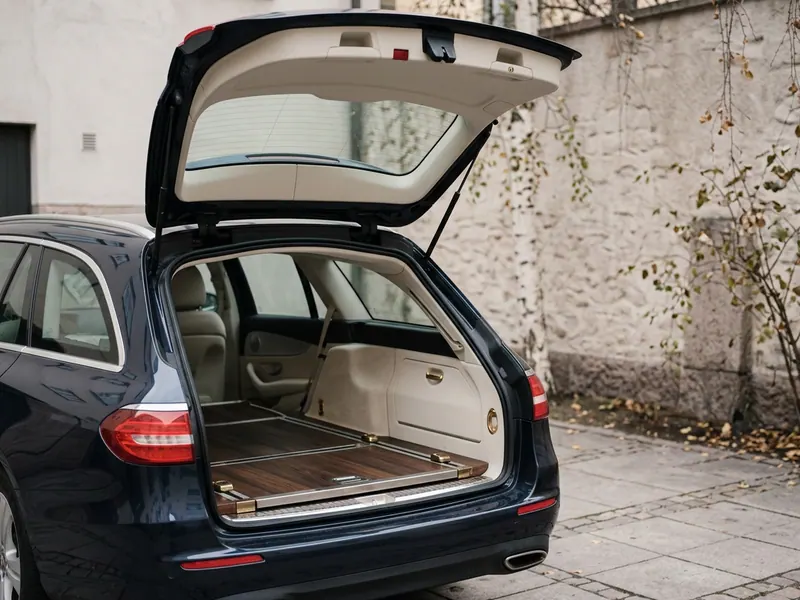
The deceased is transported in a vehicle equipped for the purpose, with a dedicated, secured place for the coffin. The car is discreet and does not stand out in traffic. At every handover, when collecting from the hospital, when arriving at the chapel and when delivering to the crematorium, our staff check the identity of the deceased and the accompanying documents, so that the right person is in the right place at the right time. The most important document is the burial permit signed by the doctor: without it no one can be buried or cremated, and the parish union's burial services need a copy of it before the cremation. Arrangements can begin before the permit is ready. Our office service, 390 euros, covers obtaining the documents and delivering them to the parish and the crematorium, so you never have to carry a single paper yourself.
What the 290 euro transport includes and what is quoted separately
Transport of the deceased in the Helsinki region costs 290 euros with us. The price covers one transport with staff and vehicle in Helsinki, Espoo, Vantaa and Kauniainen, for example the collection from the hospital to the chapel or crematorium. Each of our funeral packages, Hillitty at 1,290 euros, Klassinen at 1,790 euros and Harmonia at 2,590 euros, includes this one transport together with dressing and placing in the coffin. Further transfers are priced separately and told to you before anything is agreed: a second transport if the blessing and the cremation are in different places, a collection at night, a stop along the way, and journeys elsewhere in Uusimaa or further, which are priced by distance. We record every transfer in the family's shared online space, where every relative sees the same schedule and the same price.
- Included: one transport in Helsinki, Espoo, Vantaa or Kauniainen, 290 euros.
- Separately: a second transfer, for example from the chapel to the crematorium.
- Separately: a collection at night or a stop along the way.
- Separately: a long journey elsewhere in Finland, priced by distance, always in advance.
Storage and timing between transfers
Between transfers the deceased is kept in a cold room. At the Helsinki parish union's facilities the storage of the coffin costs 50 euros per started week for the first three weeks and 15 euros per started day after that. Blessings are held Tuesday to Saturday, usually within 2 to 3 weeks of the death, and funerals in Finland are typically arranged within 2 to 4 weeks. In our practice the cremation takes place usually within 1 to 2 weeks of the collection, and the urn is ready a few days after the cremation. We time the transfers so that the deceased is at the chapel on the day of the blessing and at the crematorium at the agreed time, with no idle days in between. If relatives are travelling from far away and the blessing needs to be moved, we tell you what the extra days cost, so the decision is yours.
Long distances in Finland and transport from abroad
When the deceased is to be buried in another town, or the death happened elsewhere in Finland, the transport is priced by distance, and you receive the price in writing before anything is agreed. We handle the collection, the coffin, the documents, interim storage and the transfer to the chapel or cemetery at the destination, as well as contact with the parish there. A death abroad additionally requires the death certificate and other official documents, a coffin that meets international requirements, and contact with airlines and the authorities of both countries. We take care of these for you. In these cases the timetable is less certain than for a funeral within Finland, and we tell you about every step as soon as we know it. Both situations have their own guide, When someone close to you dies abroad or in another town, which covers documents, insurance and parish fees.
What you can leave to us
Transport is the part of a funeral that the family need not, and by law may not, handle themselves. You can leave to us the agreeing of the collection with the ward or care home, the dressing and placing in the coffin, every transfer to the chapel, cemetery and crematorium, the delivery of the burial permit to the parish, and the transport of the urn to the agreed place. We tell you the time of each transfer in advance, and you may be present at any stage. Call 09 6129 890, we answer around the clock, or book a planning visit at Annankatu 12; the visit is free of charge. We also come to your home in Helsinki, Espoo, Vantaa and Kauniainen. We serve you in Finnish, Swedish and English, and every arrangement can also be made entirely online.
Frequently asked questions
May a relative transport the deceased themselves?
No. The deceased may be transported only by a funeral home with proper vehicles and staff, by a health-care unit or by the police. Relatives may however be present during the collection and accompany the coffin from the chapel to the cemetery. We handle the practical transfers and agree every time with you.
How much does transporting the deceased cost?
One transport in Helsinki, Espoo, Vantaa or Kauniainen costs 290 euros with us and is included in every one of our funeral packages. A second transfer, a collection at night or a journey elsewhere in Finland is priced separately and told to you in writing before anything is agreed. Long journeys are priced by distance.
How soon must the deceased be collected from the hospital?
There is no deadline. The hospital or care home keeps the deceased until the funeral home collects them, and most families call within a few days. Once the transfer to the parish union's facilities has been made, storage of the coffin costs 50 euros per started week for three weeks and 15 euros per day after that.
Is a coffin needed if the deceased is cremated?
Yes. A coffin is always needed, also for cremation, and every transfer from the cold room onwards is made in the coffin. Only the first transfer from home or a care home to the hospital cold room may be made in a transfer bag. Our least expensive coffin is the Vaahtera coffin at 520 euros, included in the Hillitty package.
What happens if the police investigate the death?
After a sudden or unclear death the police arrange the transfer to a hospital for investigation, and the cause of death may be established forensically. This delays the burial permit. We continue the transfers to the chapel, cemetery or crematorium as soon as the police have released the deceased, and you can start planning with us while you wait.
Can we be present when the deceased is collected?
Yes. You may be present during the collection at home or in the care home and, if you wish, also when the deceased is placed in the coffin. We tell you the time of the transfer in advance so you can be there. Many families also want a quiet farewell in the chapel before the blessing; we book the viewing in the chapel for you, price 80 euros.