The newspaper death notice and the obituary
In short
A newspaper death notice is optional; the authorities are told by the doctor. The notice gives the name, dates of birth and death, the mourners, and either an invitation to the blessing and reception or a note that the blessing was held privately. The price varies by paper and size; we tell you before ordering. We draft and place it.
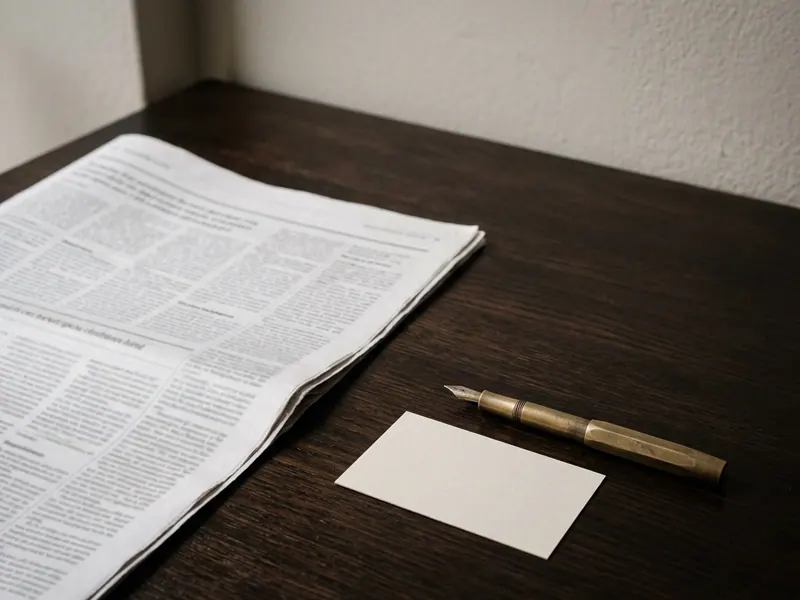
What the death notice is for
A death notice in the newspaper is not an official notification. News of the death goes to the population register from the doctor's notification and from there to Kela, the banks and the pension providers; no separate notification is needed. The newspaper notice is the family's message to others: relatives, friends, former colleagues and neighbours whom there is no time or way to reach personally. It says that a person has died, whom they left behind and how they will be seen off. The notice can invite people to the blessing and the memorial reception, or announce afterwards that the ceremony has already been held. It is entirely optional: many families publish a notice, others tell of the death only by letter or phone, and both ways are fine. For many the notice also becomes a keepsake later, cut out and kept.
What the notice contains
The structure of a notice is established, and the papers follow it with their own typesetting rules. At the top are the symbol and the name of the deceased, below them the dates of birth and death and often the places, then the lines of mourners, and finally the details of the ceremonies and any wishes. Not everything needs to be said: the smallest notice contains the name, the dates and the mourners. Below are the usual parts in the order they appear. We show you a proof before publication, so that names, dates and times are certain to be right.
- Symbol and name: the full name, where needed also the maiden name or the name they went by.
- Dates of birth and death and the places, for example born in Helsinki, died in Espoo.
- The mourners' lines: spouse, children with families, grandchildren, siblings, other relatives and friends.
- A short verse or line of remembrance, if wanted.
- Invitation: place and time of the blessing, the memorial reception and how to reply; or the statement that the blessing was held with the closest family present.
- Wishes: a donation instead of flowers, a single rose only, or a wish about dress.
- Thanks: for example to the care staff for good care.
The mourners' lines and the order of names
The mourners are listed by closeness: first the spouse, then the children with their spouses and children, after them the deceased's siblings and parents, and finally a line for others, for example other relatives and friends. Names can be written in full or as first names only, or the lines can be condensed to the form children with families. Neither way needs to cover everyone; the aim is for the reader to recognise the family, not a family tree. Ask relatives before printing whether they want their name in the notice: some do not, and that must be respected. In blended families and long relationships the order is agreed together, and there is no rule for it. If the deceased wished a particular form in their pre-plan, it is followed. Under the Burial Act, the deceased's own conviction and wishes guide the whole funeral, the notice included.
An invitation to the blessing or a notice afterwards
There are two main types of notice. The invitation notice is published before the blessing and gives the place, day and time, the memorial reception, and to whom and by when to reply. It is published only once the blessing time is confirmed with the parish, and early enough for those coming from far away to arrange their journey. Blessings are held Tuesday to Saturday, usually within 2 to 3 weeks of the death, and funerals are typically arranged within 2 to 4 weeks, so the invitation reaches the paper in good time. The second type is published after the blessing, when the ceremony was kept to the closest family; the notice then states that the blessing was held with the closest family present. A notice published afterwards can include an invitation to a later memorial gathering or to the urn lowering. If the deceased is brought from abroad and the timetable is uncertain, publish the notice only once the day is certain.
Choosing the paper, timing and price
The paper is chosen by where the deceased's relatives and acquaintances read: the main paper of the home town is the most common choice, and alongside it you can add the local paper of a former home district or a Swedish-language paper if the family is bilingual. The same notice can be published in several papers. Each paper has its own publication days and submission deadlines, and the notice must be submitted by the paper's deadline; we know the practices of the Helsinki-region papers and tell you which day the notice can make. The price depends on the paper and the size of the notice: a longer list of mourners, a verse and an invitation add to the size, and the papers' pricing varies a great deal. We give no prices here, because they are the papers' own; we tell you the exact price before ordering, and you can make the notice smaller if the price feels too high. The paper invoices the notice, and it is deductible as a funeral cost in the estate inventory.
Symbols and verses
At the top of the notice there is usually a symbol. The cross is the most common mark for a deceased who belonged to the church, but no one is obliged to use it. Other common symbols are a bird, a flower, a heart, a tree, a boat, a wave, a mountain or a clef, and the papers have their own selections; some papers also allow a picture of your own. The symbol should match the deceased's own conviction and life, not the family's taste. The verse is short: one or two lines from a poem, a hymn, a song or the deceased's own saying, or no verse at all. Church funerals often use a hymn or Bible line, non-religious ones a poem or a line of remembrance. Papers do not necessarily publish long quotations under copyright, so brevity is safe. We are glad to suggest options and show in the proof how the symbol and verse look typeset.
The thank-you notice after the funeral
After the funeral some families publish a short thank-you in the paper for the attendance, flowers and remembrance; others send thank-you cards or thank the guests at the end of the memorial reception, as the custom is. The thank-you notice is small: the name of the deceased, thanks for the attendance and flowers, possibly thanks to the care staff, and the family as the signature. It can be published in the same paper as the death notice a few weeks after the funeral; there is no hurry. If the notice asked for a donation instead of flowers, the thank-you can mention the cause. It is worth keeping a list of the condolence cards and flower ribbons read at the reception, so that personal thanks reach the right people. We draft the thank-you notice and place it in the paper in the same way as the death notice, and the price is told before ordering.
Obituary and notice: what is the difference
The death notice is an announcement the family buys, whose content the family decides and the paper typesets by its rules. An obituary is an editorial text: a short life story written by a relative, friend or colleague and sent to the paper's editorial desk. The editors decide whether the text is published and may shorten or edit it. The obituary tells who the person was: birth and education, work and positions of trust, interests, character and what mattered to them. It is usually written within a few weeks of the death, but papers publish obituaries later too. A good obituary is concrete and short, avoids superlatives and mentions the writer's relationship to the deceased. We are glad to help with structure and language, but the voice of the obituary is the family's own. Notice and obituary do not exclude each other; many families publish both.
Telling of the death on social media
Social media reaches people fast, and that is exactly why it pays to be slow there. Tell the closest people of the death personally first, by phone or face to face, before anyone posts anything; no one should read of a loved one's death for the first time in a public update. Agree within the family who posts, when and what, so that the messages do not contradict each other. A short, plain update is enough: the name, the date of death and, where needed, a note that the funeral will be announced separately or held among the closest family. The exact time and place of the blessing should not be posted openly if the ceremony is meant for invited guests only. The deceased's own accounts can later be closed or turned into memorial accounts according to each service's own rules; we cover this in the guide Practical matters of the estate. The newspaper notice and the personal message work well side by side.
What we handle for you
We draft the death notice with you at the planning visit or by phone, choose the paper and the day, show you the proof, tell you the exact price and submit the notice to the paper by its deadline. You can also compose the notice online: the family's shared online space has a notice builder where every relative sees the same draft and can suggest changes before it is sent. In the same way we handle the thank-you notice after the funeral and help with the structure of an obituary if you wish. If the deceased recorded wishes about the notice, symbol or verse in their pre-plan, they are kept at our office and serve as the starting point. Call 09 6129 890 or book a planning visit at Annankatu 12; the visit is free of charge. We serve you in Finnish, Swedish and English, and the notice can be composed in any of these languages.
Frequently asked questions
Is a newspaper death notice compulsory?
No. The authorities, Kela, the banks and the pension providers learn of the death from the population register on the basis of the doctor's notification. The newspaper notice is the family's own message to relatives, friends and acquaintances, and it can be replaced by letters, calls or messages. Many families still publish one, because it also reaches those no one knows how to reach.
When is the death notice published?
The invitation notice is published once the blessing time is confirmed with the parish, and early enough for those coming from far away. The blessing is usually held within 2 to 3 weeks of the death, so there is time. If the blessing is held among the closest family only, the notice is published afterwards, stating that the blessing was held with the closest family present.
How much does a death notice cost?
The price depends on the paper and the size of the notice, and the papers' pricing varies a great deal, so we give no figures here. We tell you the exact price before ordering, and the notice can be made smaller if the price feels too high. The paper invoices the notice, and it is deductible as a funeral cost in the estate inventory.
What do you write if the blessing is for the closest family only?
The notice is published after the blessing and states that the blessing was held with the closest family present. That way no one is left waiting for an invitation. If you wish, you can include an invitation to a later memorial gathering or to the urn lowering, so that a wider circle can take part.
Can the notice be published without a cross?
Yes. The cross is a custom, not a rule, and under the Burial Act the deceased's own conviction must be respected. The papers offer a selection of other symbols, such as a bird, a flower, a heart, a tree, a boat or a mountain, and some allow a picture of your own. The notice can also be published with no symbol at all.
Do you have to publish a thank-you notice?
No. Some families publish a short thank-you in the paper for the attendance and flowers, others send cards or thank the guests at the end of the memorial reception. If you publish a thank-you, it can appear a few weeks after the funeral; there is no hurry. We draft and place it for you in the same way as the death notice.